Identify chemistry and format
Similar-looking coin cells may have different chemistries and voltage characteristics. Use the exact model designation.
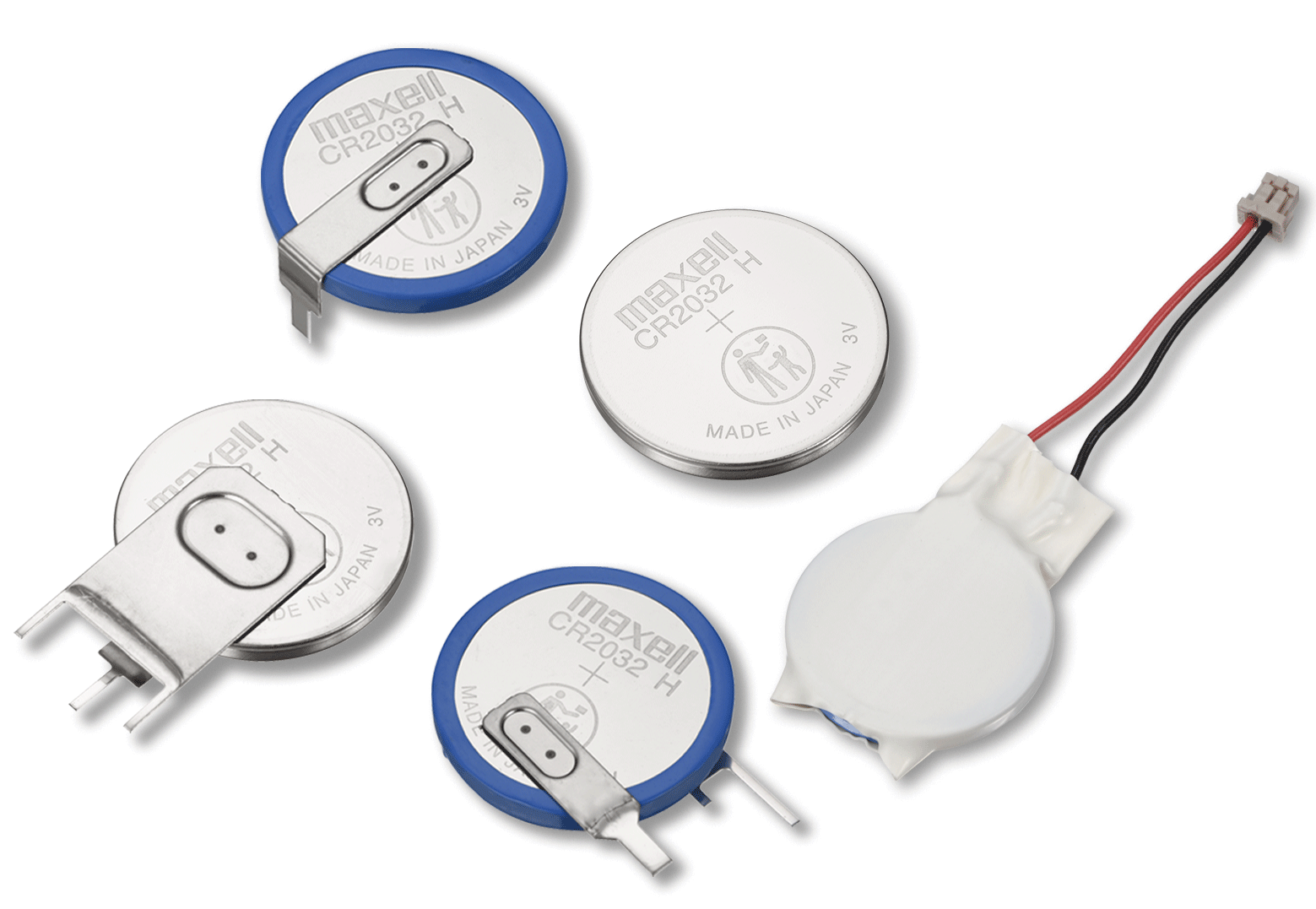
Coin-cell family reference from Jetray media library showing Maxell CR2032 H. Not an exact image of every selected format; brand, availability and termination must be confirmed.
Share the PCB footprint, polarity, pulse load and mechanical drawing. Jetray can assess the required cell format and whether a suitable supply or integration option is available.
Source review: 4 November 2026 · No inventory or price is implied.
| Parameter | Published reference |
|---|---|
| Format | To be specified |
| Termination | Holder or tabs — confirm feasibility |
| Capacity | Subject to selected cell datasheet |
| Availability | Confirm by inquiry |
For coin cell batteries, work through these requirements before finalizing the battery choice.
Similar-looking coin cells may have different chemistries and voltage characteristics. Use the exact model designation.
A nominal capacity figure alone does not describe voltage response under short current pulses.
Specify a holder or supplier-approved tab assembly, polarity and mechanical drawing before ordering.
Request the current electrical specification, a mechanical drawing, protection limits and test conditions. Where required, ask for the exact model’s transport and safety documentation. Confirm the report holder, model scope and revision.
A company certificate, a cell report and a finished-pack report cover different things. The documents need to match the product and its intended use.
The published values are an initial reference. Compatibility depends on the operating voltage window, continuous and peak current, charging system, enclosure and application requirements. Share those details for a model-specific review.
Send the reference name and your project specification. The team can confirm the available configuration, sample terms, quantity, price and lead time. No standard MOQ or delivery promise is asserted on this page.
Primary lithium coin cells are not rechargeable. Match the charging behavior of the circuit to the exact battery chemistry and manufacturer instructions.
Proposed service inquiry; no verified model, inventory or welding capability is asserted.
Source paths may redirect following the corporate website’s reorganization. Ask Jetray for the current approved model sheet when a legacy page has moved.
For coin cell batteries, the most useful RFQ connects the published reference to the equipment and the project.
Exact cell chemistry, pulse profile and device cutoff voltage. Include measured peak duration and the target operating time.
Holder contact, polarity and approved tab configuration. Add the available dimensions, cable direction and the equipment drawing.
State the sample stage, expected quantities, destination market and documents required for review.
Use the collection’s practical guides to prepare a more focused engineering discussion.
Choose a coin-cell family by chemistry, voltage, charging behavior and load rather than diameter alone.
Read the technical guideBuild a realistic coin-cell evaluation around standby current, transmission pulses, temperature and the equipment cutoff voltage.
Read the technical guideMake a coin-cell inquiry precise with cell identity, terminal drawings, PCB constraints, packaging and device evaluation requirements.
Read the technical guideShare the load, dimensions and intended use. Ask for a current model specification and a project review.